The copied part of growth hormone
AOD-9604 copies the hGH Fragment 176-191.
The copied tail changed fat use in animals. It did not help people lose more weight.
The copied tail changed fat, not growth
What is the hGH fragment 176-191? It is growth hormone's tail end, and the name HGH frag 176-191 means the same part. AOD-9604 is a lab-made copy.
Growth hormone has several jobs in the body, while its tail seems tied to fat use. The rest sends the body's growth message. AOD-9604 leaves that growth part behind.
The copy slowed new fat in animal cells and helped some animals burn stored fat. It didn't send the full hormone's growth message. It didn't raise IGF-1, the blood growth signal.
That design sounded useful for weight loss, so human trials tested that hope. People lost no more weight than with placebo. Animal success did not become human help.
HGH frag 176-191 is a short protein chain
The hGH fragment 176-191 is the tail of human growth hormone. AOD-9604 is a changed lab copy. A peptide is a short protein chain. This copy adds one protein part at the front [3].
Two links in AOD-9604 fasten together. That bend holds the chain in a loop. The loop helps a chemist identify its shape. It doesn't show that the compound helps people.
Chemists also give the chain a formula and file numbers. Those labels help them match one lab record with another. They say nothing about weight loss or safety. For you, the human trial gives the useful answer.
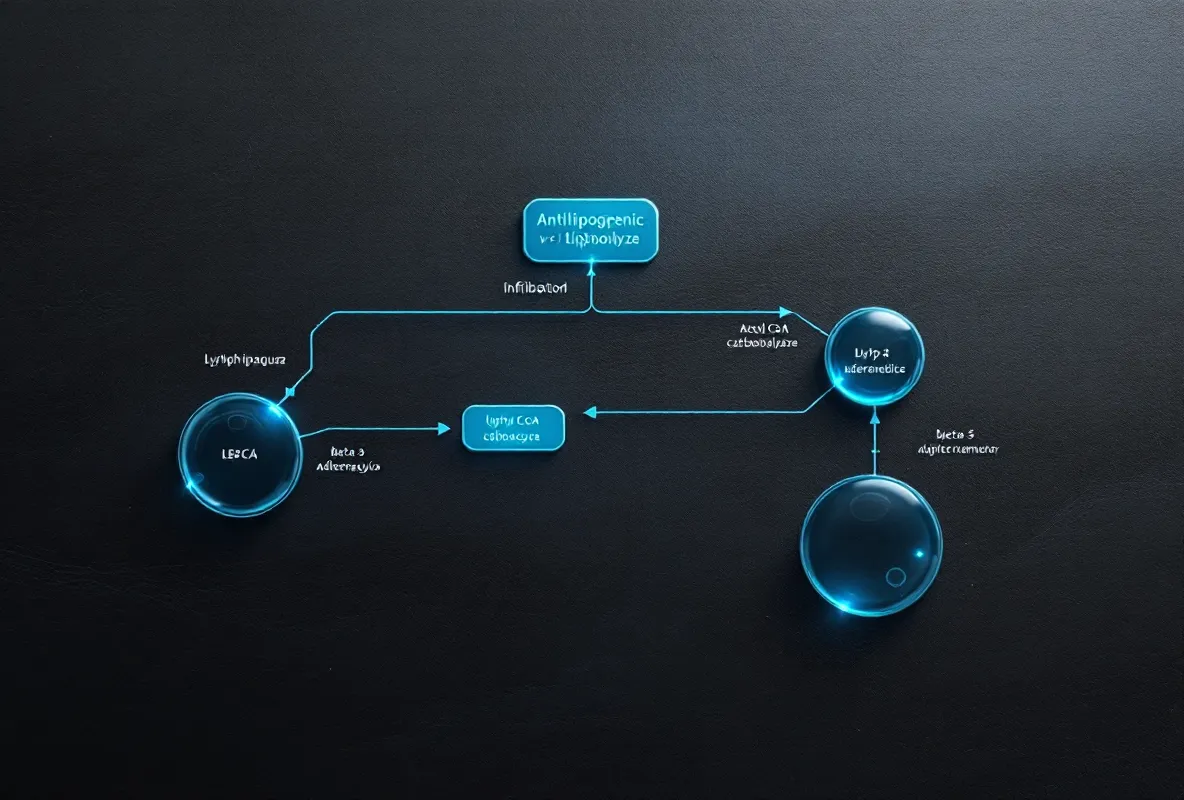
The hormone tail slowed new fat in lab tests
Early lab work checked how growth hormone affects new fat. The hormone tail slowed a key fat-making step [2]. The copied tail slowed that step as much as full growth hormone. It did not clearly free stored fat from rat tissue [3].
Other lab work tied the hormone tail to fat use [12]. Those studies dealt with cells and animals. They show only what happened in those tests. They don't prove weight loss in people.
Rat studies checked blood sugar too. Several related hormone tails caused a brief rise. Insulin stayed high longer, and the shortest tails made insulin work less well [13]. AOD-9604 didn't raise IGF-1, the blood growth signal [1].
The fragment does not act like full growth hormone
The hGH fragment 176-191 is only one hormone part. It doesn't act like the full hormone. It also doesn't tell the growth gland to release more. That difference matters when you read sales claims.
CJC-1295 is named only for contrast. That different peptide tells the growth gland to act. AOD-9604 changed fat-making in animal cells instead. It also left IGF-1, the blood growth signal, unchanged.