Personal reports and study results
AOD-9604 effects remain unproved in people.
Personal reports are kept apart from trial results. Human safety checks were short, and no dose is given.
No fat loss has been proved in people
Which AOD-9604 effects are proved in people? No fat loss is proved, though test animals made less new fat and burned stored fat. The large human trial found no gain over placebo.
People using the compound often report no body-fat change, and many report few day-to-day problems. Some describe less puffiness or tingling than with growth hormone. Personal reports can't prove that difference.
The sections below keep reports apart from study results and name safety gaps and past drug work. Human studies produced no approved dose. No dose plan appears on this page.
AOD9604 benefits and AOD-9604 side effects are personal reports
These comments come from people who say they study the compound by using it themselves. They aren't findings from a trial with a comparison group. No trial has checked these claims. No dose is tied to them.
Reported upsides. People most often say the compound caused few problems and few daily complaints (frequently reported). Some describe less water, joint puffiness, or hand tingling than with growth hormone (frequently reported). They say unchanged IGF-1, a blood growth signal, may explain that difference (frequently reported).
A few people describe more energy, better mood, or less hunger (occasionally reported), though a change in diet could cause the same effects. The trials weren't meant to check those claims. Reports of fat loss also included diet and exercise (frequently reported).
Reported downsides. No clear fat loss is the usual complaint, while strength, healing, and muscle often stayed unchanged (frequently reported). Some people mention a small red, itchy, or sore shot spot (occasionally reported). Many say the fat-loss claims are far too strong (frequently reported).
Claims without proof. Some people say a nearby shot melts fat in one spot (occasionally reported), but no human trial found that result. People only sometimes report a vial whose label seems wrong (occasionally reported). A wrong label means the compound can't be credited for the result.
The safety record leaves later harm unknown
Which safety facts matter for you? The studies give a few answers but leave rare and later harm unknown. Each warning has its paper beside it.
It is not an approved drug. AOD-9604 began as a weight-loss pill but never won approval for any illness. No approved dose or FDA quality rule for makers exists [9].
Human trials found no weight-loss help. Mouse results looked hopeful, but the main trials in people found no gain over placebo. The company then ended the work [10].
Most fat results came from animals or cells. Mice, rats, and cells showed changes in fat use, which don't prove that people lose fat. They remain early study findings [7].
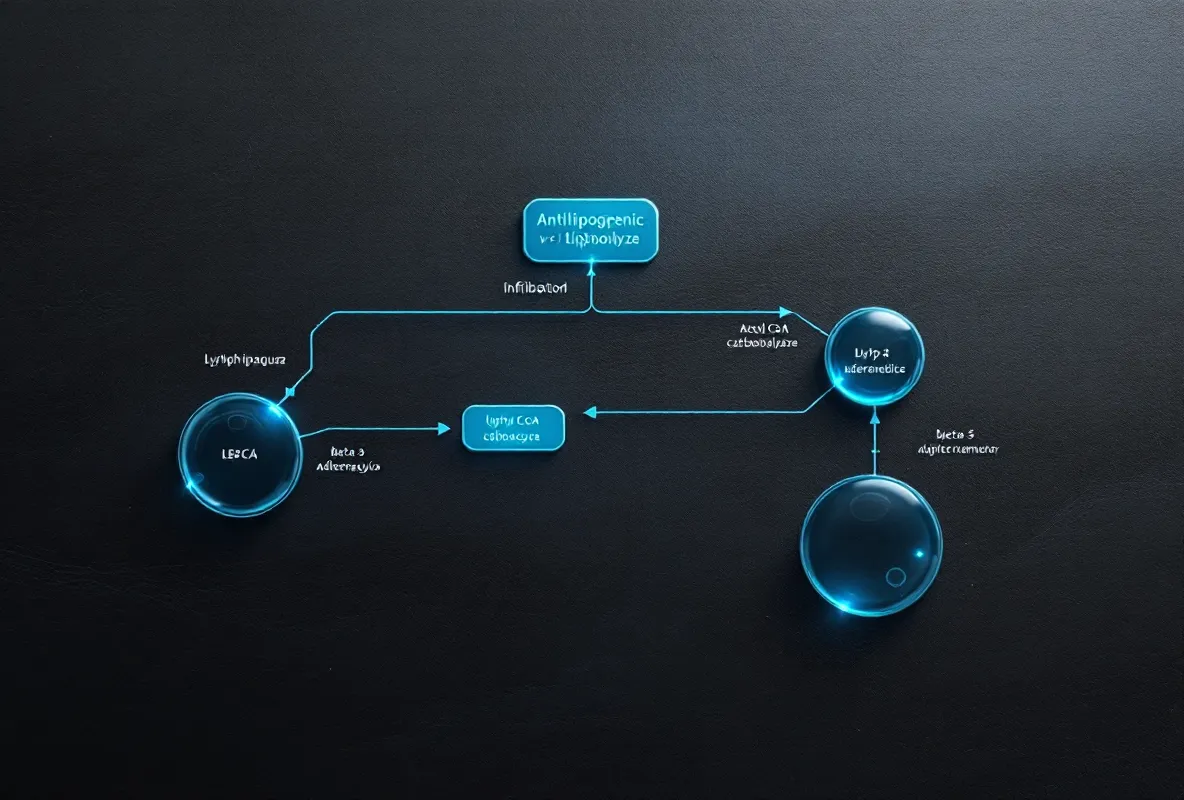
Mouse weight loss did not carry over. Obese mice lost weight and body fat. The lasting change needed the beta-3 control, which helps fat cells burn fuel. That beta-3 finding did not become human weight loss [4].
Later harm is still unknown. Human studies lasted no more than about 24 weeks. Side effects looked much like those with placebo, but rare or later harm may have been missed [9]. This gap still matters for you.
A review lists it among failed weight-loss drugs. Many drug ideas looked good in animals, and AOD-9604 also failed to become approved care. The review places it in that group [11].
The company ended the weight-loss work
Work at Monash University found the fat-handling tail of growth hormone [9]. The drug company in Australia then made AOD-9604 as a pill meant for weight loss. That aim was tested in people.
During the 2000s, obese adults joined several trials with placebo groups. The main larger trial found no added weight loss, so the company ended that work around 2007. Later animal work looked at cartilage and arthritis [9].